Welcome.
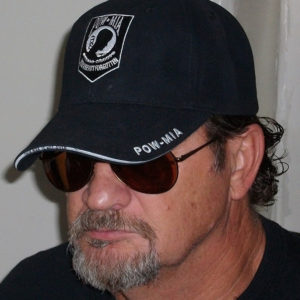
I’m Harvey Stanbrough. I was born in New Mexico, seasoned in Texas and baked in Arizona, so I’m pretty much done. For a time, I wrote under a few personas and several pseudonyms, but I take a pill for that now and write only under my own name. Mostly. You can read about my personas here. They each have their own short, interesting bio.
I am a prolific professional fiction writer by pretty much any standard. In just over 9 years I’ve written 120 novels, 10 novellas, and over 300 short stories across several genres.
None of that is a typo. I’ve also compiled around 30 short story collections and several lauded, major-prize-nominated poetry collections and nonfiction books on the craft of writing. None of my nonfiction how-to books are fluff, and none of them mimic the writing myths you will find in almost all other how-to books on writing fiction.
All of that is in addition to hundreds of articles, essays and blog posts. On a typical day, I write 3000 words of fiction and around a thousand words of nonfiction in my instructive daily Journal. It is free of charge. You can subscribe, free, at https://thenewdailyjournal.substack.com/.
Some Quick Details and Navigation Notes
No tricks here. If you’re a reader, you’re in the right place. Of course, I would say that. I’m a fiction writer. If you enjoy westerns, SF, or any of the other genres shown in the menu, you’re definitely in the right place.
On the menu, the first three tabs after The (Almost) Daily Journal will send you to my publisher website, StoneThread Publishing. I’m not trying to get rid of you, but that site’s ALL about readers. You can get some really great discounts over there. The next two tabs are also for readers, but they at least let you stay on this website.
I wanted to write an infrequent author blog too, but I honestly don’t have a clue what to say. If you want to know anything about my books or stories, characters or settings or situations, please feel free to email me at harveystanbrough@gmail.com and ask whatever questions you like. I’ll always respond, usually within a few hours.
I was gonna do posts about new releases and maybe even book launches, but with 68 novels and 8 novellas in 7 years (plus well over 200 short stories), I’m a fairly prolific novelist, so new releases come pretty often. If I had launch partied and news releases I wouldn’t have time to do anything else.
If you’re fiction writer, you’re also very much in the right place.
Especially if you’re bone weary of trying to follow all the “rules” of writing: outlining, (writing), revising, seeking critical input, rewriting, polishing, and finally submitting or publishing the work. Notice, only one of those “rules” is actual writing.
The truth is, those rules are myths. They’re a great medium for growing mushrooms, but they won’t help you write. They will conspire to slow or stop your writing. I know because I used to follow them myself.
Do you know how I’ve turned out almost 80 novels and novellas is just over 6 years? I’ve ignored those stupid rules, trusted my characters to tell the story that they, not I, are living, and served as their stenographer. In other words, I got out of my own way. (Stephen King, for just one of many, does the same thing.)
So again, if you’re tired of
- constructing character sketches and outlines to force your stories into a mold
- trying to construct just the right characters or character names or
- trying to construct just the right plot for the story or
- coming up with plot twists and turns that will entice the reader to keep reading or
- manuscripts dying at the 1/3 or 1/2 point or
- anything else that makes you feel as if you’re slogging through the writing process
then you’re definitely in the right place. And listen, when anyone tries to convince you the stuff in that list up there is necessary, ask yourself what they’re getting out of it. Do they have nonfiction books to sell? Think about it. Bugs the snot out of me that they’re getting wealthy teaching you stuff that will slow or stop your writing.
I have two nonfiction books myself I’d love others to read: One is Quiet the Critical Voice (and Write Fiction) and the other is Writing the Character-Driven Story. But I’m not telling you all this stuff to get you to buy my books. If you want them and can’t afford them I’ll send them to you free. I just want you to experience the joy and freedom I experience as a writer.
Anyway, most days I post a blog about the writing craft. You can find it at https://hestanbrough.com/ or by clicking the tab just to the right of Welcome.
You’ll notice a lot of the tabs in the menu are labeled for writers. I enjoy paying forward the unique things I’ve learned about writing fiction. I say they’re unique because they aren’t the typical, regurgitated slop you hear repeated pretty much everywhere out there. All of that said, every writer is different. If you’d rather slave away over a hot stove all day to construct a story or novel and then complain about what terrible drudgery writing fiction is, have at it. Won’t slow me down at all or lessen my fun in the slightest. 🙂
Folks, writing fiction really can be a ton of fun. It can be an escape not only for the reader, but for YOU. It really doesn’t have to be the old outline > write > revise > workshop > rewrite > and polish ad nauseam assembly line the English teachers talk about. (Don’t send letters or emails. I used to be an English teacher, so I can talk.)
Welcome!
Harvey Stanbrough
PO Box 604, St. David AZ 85630-0604