Poetry

Hi Folks,

This page highlights some of my poetry collections. For a sampling of some of my poetry, including the desert poems, please just scroll down.

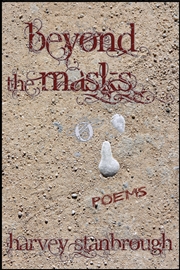
Beyond the Masks is an eclectic collection that was nominated for the National Book Award in 2006. The poems are gathered into four sections: Lessons, Tales, Complaints, and Beyond the Masks. Nothing about this collection has anything to do with a world where simply sitting in a circle, holding hands and singing Kumbaya will make everybody put down their guns and play nice. This poetry derives from the real world. Any flowers involved are probably being clutched by the widow of a fallen Marine, and if there are butterflies, they’re in the reader’s stomach. If you want milquetoast poetry, this is not for you. If you want poetry that you have to “interpret” to understand, this is not for you. If you want brain-twisting reality and gut-wrenching emotional depth—if you want poetry that will, as one reviewer put it, “make you get up and pour yourself a brandy”—you want this poetry collection. Influenced by W.B. Yeats, Robert Frost, Anthony Hecht and Howard Nemerov, Stanbrough’s poetry sings with the rhythms of blank verse. If the spiritual and the earthly can be trapped in one place, this collection is that place.

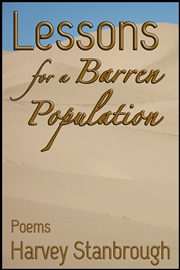
The first edition of this collection was the first-ever full-length original poetry collection published as an ebook. That happened back in 1999 by Hard Shell Word Factory. Lessons for a Barren Population was nominated for a Frankfurt Book Fair Award. The poems are separated into five sections: Observation; On Writers; On War; On Love; and The Lessons. Like the poems in Beyond the Masks, these are not greeting card verse, but poems derived from real life.

Selected Poems and Intimations of the Shapes of Things are two more collections in the blank verse lineage of William Butler Yeats, Robert Frost, and Howard Nemerov.


A Poetry Sampler

including the Desert Poems


Good News
The Pulitzer nomination came at length,
Accompanied by not one ounce of fame:
The poet got a haircut, but his strength,
And worse, his weaknesses, remained the same;
His wife remarked how nice he looked, and smiled;
A kitchen drawer, left open, bruised his shin;
His bitchy ex still went to court and filed;

The cat went out; another cat came in.
The doctor found a dollop on his lung
And probed as if to drive it through his back;
The coffee, freshly brewed, burned his tongue,
And cigarettes went up ten cents a pack.
Sonnets eluded him like good reviews;
John Frederick Nims suggested clerihews.

* * *

Living Poem

I want to make a living poem of you,
trace my lips across yours like a breath
slipping from the wing tips of a dove,

caress your hair as softly as the touch
of a wisp of cotton across a dandelion seed
or the powder from the soft wings of a moth

settling on a mote of dust. I want
to touch you tentatively, as if our souls
might fire a thousand volts, uniting us.

I want to make a living poem of you,
hear your silence seeping through your breath
as you sleep, peaceful in your dream

your breasts rising, falling steady, quiet
breathing in steady, breathing out
hushed, your sleeping form a symphony

of solitude, dreams and faint smiles,
a poem on a sheet of gossamer
that only a lover’s touch could pen.

* * *

Showtime

So much in life depends on puppetry:
the strings bring up the corners of the mouth,
a smile displaces sorrow for the crowd,
and no one dares look closely at the eyes….

* * *

A Nutshell History of Man

Slipping across the lily pond, a frog
bug-eyed a lady frog, croaked her an anthem,
paddled over, crept up timidly,
compared her warts with his and found his lacking.
He realized at once she was the One,
the other frog that could make frog-life whole
and thereby settle down his mean frog-self
simply by being his lady frog-in-waiting.

She smiled and showed a bit of gelatinous tongue,
enticing our would-be frog hero to leap,
in a definitive show of frog-prowess,
froglegs bulging ‘neath the fading moon,
his eyes on her and not the landing zone,
which suddenly became a ‘gator boat
and into which he landed with a splat
and was gigged without the slightest ceremony.

II

Just before the spear released his soul
he wondered, wide-eyed, swearing on his warts,
how life had come to this: how he could die,
be spirited away from pond and pad,
be rendered from his legs and tossed aside
as if he’d never tadpoled up the creek,
outleaped the other frogs or caught a fly,
as if he hadn’t fallen once too often.

* * *

Consent?


“What use to learn the lessons taught by time
if a star at any time might tell us: Now.”
~ Howard Nemerov in “The Consent”
If a star at anytime might tell us Now
as stars have done the leaves and have done you,
a great among the century’s great bards,
what use indeed have we to learn the lessons
taught by time? except that we have learned,
from Yeats and Frost and You, of Poetry,
at once a valued lesson learned and guarded
well against the stars and their moré³®

Nothing has been for nothing, Laureate:
your students cannot wander in a meadow
without wond’ring after amateurs;
cannot view a man and dog walking
without a sense of partnership; a mud
turtle without the bending grass; a jet
descending over the Lady in the Harbor
without a sense of you there in her torch.

We try today, as you had done, to notice
the awesome things that matter least to some
and most to poets, and record the cycles
of those stars in their reversed abyss;
and we wonder at the easy pace
with which we all step out toward that Now,
and hope, in some perversion of the truth,
they have no certain target specified.

* * *

The Bear

It goes like this: two fellows on a hike,
one dares the next to rouse a sleeping bear,
by prodding, with a stick of no great length;

the one who hears, accepts, and, smiling broadly,
perhaps a bit from nerves standing on end,
approaches quietly, appearing cautious

(except that he’s about to prod a bear,
whose goal it was to sleep and dream of fish)
the stick ahead and all his hopes behind;

the other, smiling broadly too, at first,

even snickering a bit, no doubt
because he is the one behind,

sets one foot pointing firmly down the line
dissecting fool and bear, the other foot,
more sensible, edging toward the car.

Now the grisly moment: and the stick
proffered, quivering, breezes past the bear,
who moans and shifts, dreaming of slapping salmon,

but moans. That is enough. The fool is gone
before the stick has fallen to the ground,
his shoes tracking up the other’s back

who falls and claws his way through leaves and twigs
cursing cowardice and faulty friends.
The bear eats salmon, smiling in his dream.

* * *

All Things May Come

The narrow street at six p.m. is heavy
burdened so with loiterers and bums
it seems to tilt. The shadows of the high

rise buildings slice the curb, and passers-by
cough exhaust along the fume-choked sidewalks,
soot the one ingredient that’s missing

from this Dickensian inner city.
Churchbells chime and dowdy ladies trundle
children toward the sound. Mustn’t keep Jesus

waiting. Waiting seems a nobler cause
to some, just risen from a huddled doorway;
they’ve learned that rushing does no good. In time

all things may come to those who wait. A cop
wanders past the empty stores and faces
himself in a window, turns and nods

You’re no trouble are you? half to me,
half to the air, rises on his toes
and moves away with just one backward glance.

The shadows lengthen quickly in an hour
and usher in a chill that settles deeply,
offering no solace for these streets:

not a prelude to a new dawning;
not a harbinger of peaceful sleep;
not so much a blanket as a shroud.

* * *

Intimations of the Shapes of Things

“The pencil lead’s become a stub, its black
Graphite remains became the world you made,
And it will shorten when you sharpen it.”
~ Howard Nemerov, “Drawing Lessons” ~

I

There is a certain Shape for every thing
Despite its standing in the world, despite
Its own desires or how it might appear
In any ray of light or lack thereof.
In ocean depths, atop the highest mount,

At North Pole or at South, the equator,
Along the lines of any longitude
Or latitude, that certain Shape remains,
And human thought has no bearing. No
Matter that we name it Time and mark

Its passing as if our salvation rests
On nothing more than watching as it goes,
Time still is greater than our endless need
To mark its passage or deny the scars
Endowed upon us by each quiet tick

And whispered tock, assassins creeping in
And at our own defined invitation:
No matter that we say Deciduous
When gazing upon a maple, oak, or elm
And haughtily describe the lower system

By our vision of the upper. Look
How root and canopy mimic the other,
Though one mines water and the other air!
See how the two seem bound by more than trunk
And somehow bound to us, as if they wished it;

No matter that we call these others Beasts
Then set ourselves in earnest to the task
Of noting this one tic and that iota
Even to defining Fur and Hair
And any other traits that serve to mark

Some difference between their lowly selves
(Furred or feathered, as they are) and us,
Whom, by extension, we loudly proclaim
The more exalted Ones but never note
They do not stoop to argue foolish points;

No matter that we gaze in wonder, name
Those Stars, assume them lovely decoration,
Study them, certainly, to please
That urge to showcase our brightest minds,
That we can study them, can mine their secrets,

Endlessly inventing bigger bangs
And ever recreating our importance
At center, where observers always stand:
No wonder we cry out for that One God,
Whom our ancestors named the Great Creator

Of every Shape, certainly, but ours
In His own image, in His own perfection,
Whence we fell but can ascend again
Per our belief in Him and His belief
In us and our belief in that One Shape

Whence we were formed, to which we pray, &c.
All of this continues without end
As far as mortal minds can comprehend
These shapes, named or unnamed, in time or no.
But there is a certain Shape for every Thing

Despite its standing in the world, despite
Its own desires (or ours) or how it might
Appear in any ray of light or lack
Thereof, despite your will or mine or His—
Or His—if He is there despite it all—

II

Because we’ve grown too fond of our own shape
(This image of a mirror-hugging fool)
We’ve grasped the pencil ’til it’s gone to stub,
Become a less-than-accurate rendition
Of the world. We’ve written nothing new,

Drawn-down the world and all that it contains,
And whispered nothing more substantial
Than graphite leavings across a once-pristine
Page, leavings that even Time itself
Can whisk away with its own passing.

There is a certain Shape for everything
Despite our brooding insolence, despite
Our need to be correct, despite our need
To aggrandize ourselves on this earth—
And none, sadly, is lesser than our own.

* * *

Close-Up of a Beech Tree

Striations fade to shades of tan and brown;
serrated edges wither, fold, and crack;
veins reduce themselves, orphaned and dry,
but cling more tightly, stronger than their cousins
or else afraid to separate and fall;

and like a frail old man fearing winter
the parent folds himself into himself,
graying ever slightly around his branches,
and wrinkling to faces in his bark
as geese, flying by, announce a sadness.

* * *

Breaking the Tenth, Mowing

“Thou shalt not covet thy neighbor’s house…
nor his ass, nor anything that is thy neighbor’s.”
~ Moses, Exodus 20:17

We stroll across the grass together, tied,
machine and I, together at the hip,
making the outward appearance that I’m in charge,
albeit of a friendly partnership.

My neighbor mows his lawn in comfort, kingly,
sitting, riding as I strain and sweat
and shove. “To get my exercise” I say,
then smile and covet, for the briefest moment,

my neighbor’s ass, or rather its location,
seated as it is upon the throne
of his machine, whirring beneath him gaily,
measuring the world to one trim height.

* * *

Resembling Uranium

Resembling uranium, she glows,
enticing in her natural element
but dangerous as well. She’ll melt your eyes
and leave you quivering in a foolish stance,
for you had thought your body fit for hers.

Wisdom comes to some, who realize
some radiant things are better left observed.
They learn too late, their hands and senses burned,
that, like uranium, she was never meant
to be discovered, captured, or confined.

* * *

Schoolhouse, circa 1893

No easy matter, bronzing these sad rooms
in words, adobe walls emotionless
and mute, their paneless windows gaping, shocked

that Death crept in so quietly. Coarse weeds
huddle in the corner by the door,
still creaking on the one remaining hinge

that wind and time have yet to rust away.
How fitting for a cholera-ridden school.
The parents must have spent a time white-lipped,

aghast but stoic, trembling in their grief
and fear that what had touched their children
might easily touch them as well. How sad

they must have been, scratching tiny graves
from limestone-laden sand. No easy matter,
piling stones on stones to keep disease

locked in and animals locked out. No task
for feeble men and women lacking faith,
this premature disposal of their future.

* * *

On a Clear Night, the Moon

turns a lighted face to earth and smiles,
slipping quietly across the night,
snuffing stars and twinkling others on,
content to momentarily eclipse
those distant, greater lights, as if it paused
and tipped a hat, then moved along again,
to the urgent business of the night,
lighting the evening for the lovers below

and mysteries on mysteries reveal
themselves beneath the glowing face: a girl
sighs yes, a boy fumbles his way to bliss;
two others, holding hands, vow forever,
certain the odds were meant for lesser hearts;
two others speak in halting tones, dividing
children, things, amazed at the relief.
We spin, the stars adjust, the moon goes down.

* * *

On Compassion Under Fire

Three feet away, I saw the death mask settle
on his face—on what was left—and my
shoulders slumped, my head jerked right, a lump
the size of god settling in my throat
and chest, my gaze frantic, racing, racing
across the paddie to the taller grass,
then to the treeline, to the million trees
and leaves from which the shot had come. Nothing.

I glanced again, rose slowly, slowly, looking
at the field and at the mask and back
and moved, the lump still resident but choking
less, across the intervening yard
to settle, like the mask, around my friend,
to cradle him and whisper It’s all right
and try to keep him calm and help him die
quietly: Please don’t give me away.

* * *

Lullaby

This will kiss you softly on the cheek,
caress your hair, as if a gentle breeze
had lightly brushed its lips across your own.

This will practice sighing as it longs
to hold you near its core, to calm your fear
and push away the darkness. This will bring

water, soothe that tickle in your throat,
calm the thunderstorms that rage outside,
smoothe the sheets and let you rest awhile.

This will lullaby you tenderly,
wake you with a gentle song, and hush
the morning sun to quiet overtones.

This will practice smiling on your lips
and in your eyes, will slip a perfect day
into your calendar. This will rise

to stretch with you each morning, lead you in
to dreams then draw you back to face the world;
yes, this will touch you softly on the cheek.

* * *

Southern Comfort

One day he sat to write about Comfort
and all the proper things it would entail:
his comfy cottage-house; his picket fence;
a clothesline stretched out back; and his good wife,
bending to her basket, hanging linens
(his and hers, their daughter’s and their son’s);
two pups; a rangy cat; a parakeet;
and evenings spent before a cozy fire.

But he awoke: the cottage-house had burned,
the picket fence had melted, and the clothes
line had snapped, as had his wife, both pups,
the cat, the parakeet, and both the kids—
something to do with volatility
and how the volatile should never try
to live a life inviolate of stress—
then he snapped too, and everything was fine.

* * *

A Prayer

Give me room to move, a spot of land
nobody else would want, a little water,
a faithful horse, my carbine and the night

deep in the Sonoran where my roots
run through the sand, where nobody knows
or cares I’m breathing, where nobody reads

foolish lines about foolish topics—
love, grace, peace, war, heaven
hell and all the rest—where I can rise

to greet the scalding sun, where I can work
in cleansing heat, and where I can sleep
without a blanket and without remorse.

Give me the strength to live a silent life,
a heartbeat muted so it goes unnoticed,
and the stealth to sidestep liars, friends

and others who would plan my every move;
a long trail out and a short trail back
to the Sonoran, to my house of stone

where my soul resides. Give me room
to move, a spot of land nobody wants,
and in your own good time, the wisdom

to know it’s time to let the horses run,
squint a final time across the desert,
close up the house and settle into sand.

* * *

Beyond the Masks
from and for Gerald Whitefoot St. Clair, just a man

“There used to be gods in everything
and now they’ve gone….”
~ Howard Nemerov in “The Companions”

I

Before we lost the gods or sight of them
and let them fade away beyond the masks

that separate their world (the world) and us,
we knew there was a line between the sea

and the coral resting there; between
the stream and the rocks that line its bed;

between the liquid and the bowl; between
the fruit and the seed; between the void

and the atmosphere; and between
the music and the flute. We heard the gods

in creaking branches, in the touch of rain,
and consequential gatherings of birds,

their flappings tuned perfection to the ear
their song an invocation in the trees,

whence they would rise as one to form a sign
then turn this way and that, as if on signal,

before they settled to the trees again
to talk excitedly among themselves

about the gods they’d called, whether those gods
would visit them and us ever again.

II

I walk with you to look beyond the masks,
to see us as we were before The Fall,

before we lost the ears to hear the gods
in everything, before we lost the eyes

to see the gods, the sense to know their worth.
I walk with you to taste the sweet mesquite,

the silence layering the land, the music
trickling down the Rio Penasco;

I walk with you to smell the dusty sage
just before it rains, the joyful sage

just afterward, and to know a god
made the difference; and I walk with you

to learn to count the threads in mescal,
listen for a blessing on the wind,

and watch a single grain of dust settle
gently on a yellowed blade of grass.

III

Before we slipped beyond the masks, the gods
guided us, beheld our gangly stride,

our awkward gait as if we hadn’t grown
into our feet. They watched us flail about,

feigning all the while a certain status,
lifting ourselves even over them

until we couldn’t hear them when they spoke
and so they fell silent. But now I walk

with you to hear them creak in juniper,
see them hunched beside the craggy rocks,

and know that we and they are of one heart,
the rhythmic heartbeat of the Law of One

as if they’d never gone, as if we’d never
turned our backs on them in our headlong

rush to leave ourselves behind, our rush
to be who we are not. But now we know:

We listen to the earth and to the gods.
We hear them and we see them peeking at us.

They slip across the window pane at night,
they whisper softly just outside the door,

and sometimes, when I’ve been well behaved,
they rustle dust in moonbeams on my desk.

* * *

Songbird

I took “Ten Thousand Miles” into the field
to a resting place for fantasies,
said goodbye, and raised a twelve-pound sledge,
then shattered it into a million shards,

each smaller than a grain of Sonoran sand.
I knelt there for awhile, feeling the need
for ritual, a final bit of mourning,
and from an inability to leave

or to believe the thing was finally done.
Eventually I rose on trembling legs,
older by at least ten thousand miles,
and stumbled back to write this harsh account

of distance, of how far I went today.
It’s all an illusion anyway:
ten thousand miles or five feet or a touch
is never so much a distance as a choice….

II

This morning over coffee on the porch
through a haze of smoke, a hummingbird
hovered just southwest of me, staring
fearfully, as if ready to flee

at the slightest motion. She’d been there
in the field, too, her rapid, humming wings
mimicking my heartbeat, her prescience
no duller than my own as the sledge

erased the saddest song in the world.
She knew a world was ending, as I knew;
she sensed the copper taste of weary sighs
and last goodbyes and severed heartstrings. Death

and last goodbyes aren’t final ’til they’re cold;
’til then they’re only practice, dread and hope
that maybe there’s a chance but no. She knew
as I knew, and she turned and flew away….

III

Late this afternoon I walked outside,
padding over gravel gone to sand
in the driveway, looking to Sonora,
these feet touching sand that touches sand

and dirt and rock ten thousand miles from here.
I caressed my Sonoran home
through the thread that runs through it,
through me and through us all. But I’m not there

and touching home in this distant way
is worse than never knowing it at all
of course, that’s true of anything. A songbird
settled gently beside me for a moment,

whispered memories aren’t worth all this,
blinked and flew away, an insistent wind
choosing the direction of her life,
her heart content, her song unnecessary.

* * *

Request

Skip the truth, please; instead, tell me
a dream, something lovely we both know
will never come to pass. Tell me the sands
stretch away for hours to the south,
so far away that hearts could languish there;
tell me the heat quickly evaporates
the tears of lovers lost in social mores;

tell me the need for water is so strong
it makes men forget to thirst for love
and truth, makes them amenable to dreams.
Say everything is fine. Say everything
is just as it should be. Please skip the truth:
the dream is gentler on the heart, the truth
lost among the shifting desert sands.

* * *

Heartwood

I’m not sure where I am or where I’m going,
even whether I can move at all

I

Sitting on the porch in the morning
or afternoon or evening—anytime
really, as long as the day is soft

and quiet—facing southwest, I pretend
the Sonoran is only a grain of sand away,
my foot touching sand that touches sand

that touches sand and so on ’til it touches
the sand in the Sonoran, where my soul
resides, if I have a soul at all.

II

The view is interrupted by the beauty
of a golden autumnal maple tree
and the graceful strands of a willow

weeping, weeping, as only a willow can,
branching fingers reaching for the ground,
perhaps to touch the sand that touches sand.

Who knows what thoughts and longings might reside
deep within the heartwood of the maple
or the willow in its solitude?

III

The apparent patience of those towering trees,
stoic in their lack of motion, graceful,
amazes me. In quiet solitude,

providing what they can—shade, beauty,
a metaphor illuminating life
and static growth—they interrupt the song

linking this tired heartwood and its soul,
forestalling any chance of finding grace.
I cannot see beyond the maple’s gold.

IV

Do they ever strain beneath the ground
to uproot themselves and just go?
Something to ponder, sitting on the porch

facing southwest anytime the day
is soft and quiet. At least I know my soul—
if I have a soul at all—is just

a grain of sand away, my own roots straining,
touching sand that touches sand that touches
sand until I finally understand.

* * *

Tell Me About Mexico

one more time
how sunny the sky, how warm
the sand, the beaches, oh how sweet
the salty air, how the seagulls’
wings roll and flow, snap
the air as they dive, slipping
currents they’ve ridden like ice
skaters on the edge of a performance—
tell me about Mexico one more time
how sunny the sky, how warm
the sand, the beaches
as my heart and mind reach strong
for the gentleness of it all
and i fail to arrive
on schedule.

* * *

Prologue

Move along, please: nothing to see
here but memories, a self-shattered
psyche, and the laughter on the wind.

No mas, no mas to speak aloud requires
the truth, or else why speak at all? and truth
requires regret, remorse…. But in silence

my thoughts are mine alone: my heart and mind
keep their own counsel, and nobody
else will ever see beyond the masks.

* * *

Rejuvenation

It’s time to reconnect some frazzled ends,
unbend a few warped planes, demagnetize
a short in my long circuit. No robot,
I, but in dire need of maintenance;

I need to spark a reconcilliation
of my soul and fire, nearly extinguished
by this funny, filthy world. I’ve come
full circle to the Necessity—a Need,

no small desire nor pouty-lipped request—
of full rejuvenation, an overhaul,
electrical, mechanical, and chemical,
so this rusted spirit might yet shine again.

* * *